Or why expensive stone rarely creates memorable holidays.
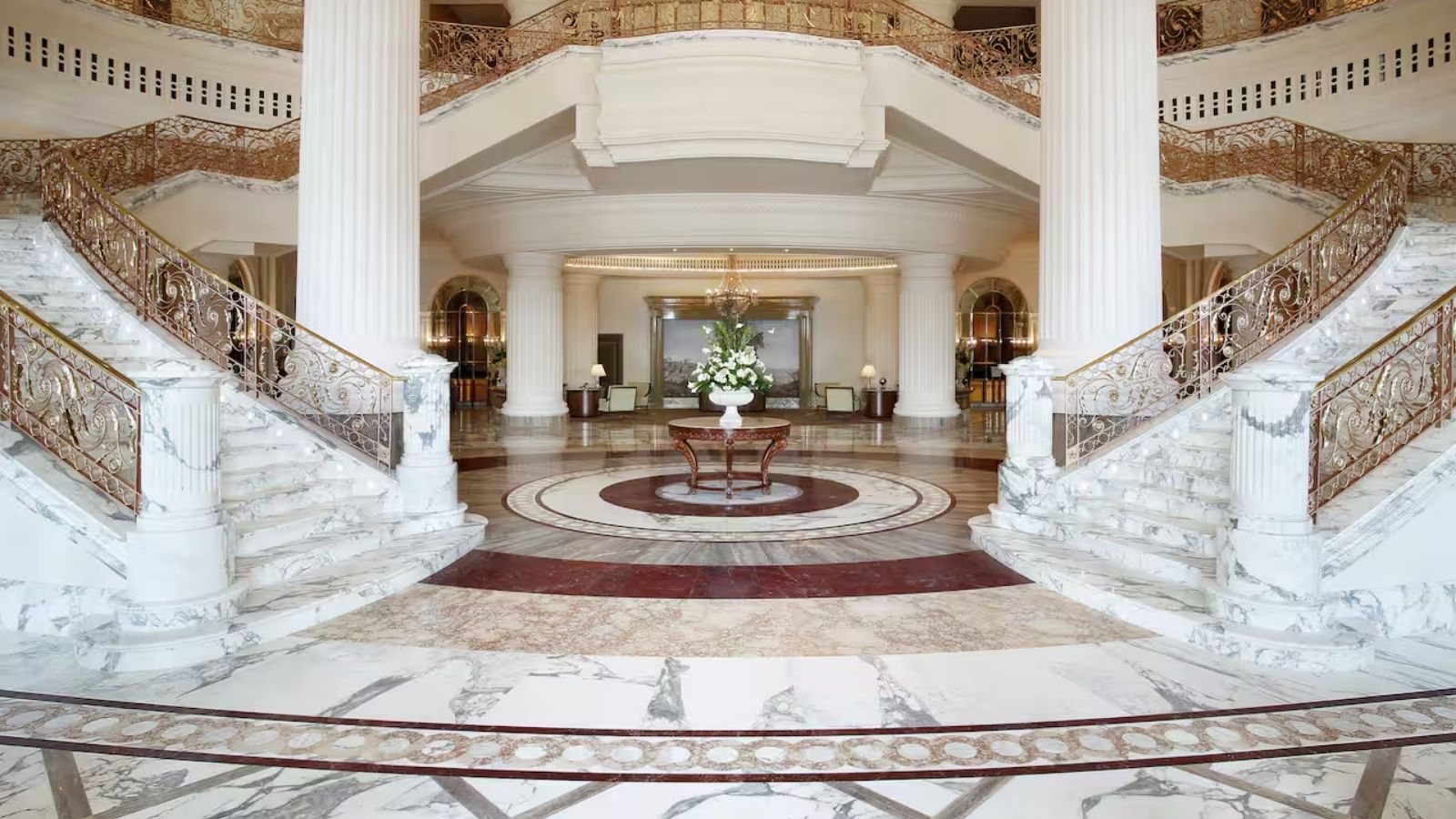
I’ve developed a completely irrational distrust of marble.
Not marble itself. Marble is innocent enough I guess, unless you come home drunk at midnight and decide to take a long shower. Generally though it’s not the stone that irks me, it’s the people who become excited about it that really worry me.
Mention Italian marble in a hotel meeting and watch what happens. Grown adults start nodding as though someone has just proposed a cure for cancer. Suddenly everyone feels safer. The owner relaxes. The architect smiles. The quantity surveyor starts having palpitations.
Luxury. Sorted.
Except it isn’t.
I’ve walked through enough hotels to know that if someone spends the first ten minutes showing you the marble, they’ve probably missed the point somewhere.
Nobody has ever come home from holiday and bored their friends senseless talking about polished stone.They remember the waiter who quietly moved them to the best table without being asked. Or the old bloke sweeping leaves who looked up every morning and said exactly the right thing.
They remember the dog asleep under the bar.
Memory is gloriously unfair. It ignores the expensive decisions and hangs onto the human ones.
Which brings me to glamping.
When I first started working with luxury hotels in Asia, the idea that people would one day pay five-star prices to sleep in a canvas tent would have sounded completely ridiculous. Somebody would probably have asked you to leave the meeting.
At the time, luxury meant adding things. More marble. More mirrors. More chandeliers. Bigger bathrooms. More gadgets. More everything.
Hotels weren’t wrong. The market was just different. The mistake wasn’t building beautiful hotels. The mistake was assuming the definition of luxury would never change.
Then along came a tent. A bloody tent. Canvas. Timber. A proper bed. A fire pit. A view worth getting out of bed for. People couldn’t book them fast enough. Not because they’d suddenly fallen in love with canvas – because what they valued had changed.
Privacy became more valuable than another square metre of marble. Silence became more valuable than another chandelier. People began paying for space, nature and the feeling that, for a few days at least, the world had slowed down. The tent was never really the product. It was simply the wrapper. It turns out the sound of birds can be worth more than another slab of imported stone. Who knew?
Actually, quite a few people knew. Safari camps knew. Old fishing lodges knew. The Japanese have known for centuries. Aman certainly worked it out before much of the industry caught up.
Luxury isn’t the amount you’ve spent. It’s the amount you don’t have to think.
It’s arriving somewhere and immediately feeling that somebody has already done the thinking for you. The light is right. The chair is in exactly the right place. The coffee appears just before you realise you wanted one. Nothing is shouting for attention because nothing needs to.
That’s confidence.
The trouble is, confidence is difficult to invoice. Marble is easy. You can point at marble. You can photograph marble. You can put marble in the brochure and tell everyone it came from Italy. Try putting “We made you feel completely at ease within thirty seconds” on a specification sheet. Good luck with that.
Hospitality still has a habit of confusing expensive with valuable. The two occasionally overlap. More often they don’t.
Marble is expensive.
Remembering a guest’s favourite table costs nothing.
One impresses the accountant.
The other creates loyalty.
We keep investing in the things that are easy to measure because the things that really matter are awkward. You can’t order atmosphere from a catalogue. You can’t import warmth from Italy. And there’s no specification sheet for making people feel that they’ve chosen exactly the right place.
The irony is that the places I remember most aren’t the ones with the most marble.
They’re the ones that made me forget to notice it.